- What will you be doing as the new Vice President of Business Development for Industrial Solutions?
I will lead business development, sales, and global growth initiatives in new and existing markets.
- What was your previous position?
Global Director, Applications Engineering at Maxwell Technologies. I previously also held executive management positions in general management, engineering, and operations at Delphi Electronics & Safety, EnerDel, and International Battery. - What excites you most about joining the Telamon team?
I'm enthusiastic about the past progress of the team and the entrepreneurial approach that has been taken to grow the business. Open minded business approaches along with customer focus drive growth and improvement. I believe that Telamon has a winning formula and the right approach to delight customers regardless of market. - What do you hope to accomplish within your first year at Telamon?
I look forward to developing an even stronger growth path for Industrial Solutions over time. I believe that I can bring my experience in automotive and other industrial markets along with my working knowledge of operating in other regions to the team so that we can generate a more comprehensive growth plan. - Where do you see the Industrial Solutions division in five years?
I hope to see a major business press article (e.g. The Wall Street Journal or Bloomberg Business Week) that discusses Telamon's global success in bringing new business models to the transportation industry with corresponding revenue and profitability.
Tuesday, April 28, 2015
Industrial Solutions - Q&A With Our New VP of Business Development
The Industrial Solutions (IS) team is very excited to welcome a new addition to the team - Tom Puza, Vice President of Business Development! We recently sat down and had a chat with him about his role and direction for IS.

Tuesday, March 17, 2015
Energy Solutions - Energy Security

In a previous blog, we discussed why companies invest in sustainability and “energy management” programs. In addition to reducing costs, I mentioned brand engagement and reducing business risks, or “risk management”. Good risk management identifies and offsets events or practices that can reduce the profits of a business. If your business involves anything more than running a lemonade stand – access to an energy source that can provide ample, reliable and affordable energy is of critical importance to running your business. This is called “energy security” and is a frequent point of discussion inside of global companies with operations in developing countries. There are few risks to business with as large a potential impact as energy security. However, these risks can be reduced or even eliminated with strategic planning, vision and firm intention.
The phrase “energy security” is becoming
more prevalent these days, popping up in news stories about a nation with poor
infrastructure or minimal natural resources.
It is a big deal in geopolitics and in
business. The national borders of the Middle East today were established after
World War I in part to address the energy and resource needs of the West by
allocating spheres of influence to various nations. The expansion of Imperial
Japan in the 1920’s and 30’s was driven by the many factors, one of which was
access to energy sources. Today, China is investing in oil and gas fields
globally and spending a significant amount of capital to ensure future access
to energy.
Without access to energy that is
reliable and affordable – both the country and the business will die.
The USA has been very fortunate in
recent memory with the last significant disruption to energy resources stemming
from the OPEC oil embargo of the 1970’s. The shock to our economy and the fear
it created can still be seen and felt today through the Energy Department of
the President’s Cabinet, the CAFÉ fuel standards introduced to mandate vehicle
efficiency, and the White House installing solar panels on the roof during the
Carter Administration, when solar cost nearly $50 per watt. But most of the
time when we think of energy security, it’s “over there” in places like Brazil,
a country that gets over 80% of its electricity from hydroelectric dams. It is
a country that is reeling from political scandals, a sluggish economy, and a
Once-In-A-Century drought that has crippled production and increased prices
over 200% for many customers.
Overnight.
And it’s getting worse.
On top of between 9 and 20 layers of
taxation on energy from federal, state and local Brazilian authorities; grid
and transmission fees have increased 25% this year.
The lack of water has forced utilities
to generate electricity with natural gas, which is 5 times more expensive in
Brazil than in the USA. The high costs, combined with subsidies and price
controls imposed by the government less than 3 years ago were bankrupting the
utilities. So on March 5th, Brazilian consumers were hit with another 23%
increase. The energy problems being dealt with will reduce Brazil’s GDP by a
minimum of ½% in 2015. Companies that were used to $10,000 electric bills are
now dealing with $25,000 bills (or more) for the foreseeable future.
Energy security should be a priority for
any company that relies on energy to deliver their product to the market –
whether it is a manufacturer or a service provider. While it is especially
important for companies operating in developing countries and economies, it
isn’t just for foreign operations as today NASA put out a forecast showing that
California’s drought has reduced reserves and reservoirs to approximately 12
months of usage.
If energy security is of interest to
your organization – Telamon Energy Solutions is ready to help.
- Mark Brown
Sales Manager
Energy Solutions
Wednesday, March 4, 2015
Medical Solutions - CPPH Conference
Telamon
Medical Solutions is proud to present the Community Partnerships in Population
Health Conference, “The Impact of ACA, Medicaid & Indiana HIP 2.0
on Non-Profit Health Service Providers”, on
Wednesday March 11th.
This is the first conference in an educational series targeted to non profit executive directors, non profit program managers, non profit grant writers, policy researchers, community health centers, population health nurses, and population health service organizations.
Telamon is excited to partner with leading experts in the field to provide a learning opportunity to present the latest in regulatory impact and a discussion-based format for collaboration and knowledge sharing. We look forward to learning from our presenters – Mr. Jing Xu, Master’s candidate at Indiana University School of Public and Environmental Affairs with front line experience with Enroll America and National Community Health Centers in Washington DC and Mr. J Hopkins, Vice President of Business Development for ClaimAid Consulting, a leading provider of comprehensive eligibility and enrollment services and claims resolution for hospitals and health care providers, with significant perspectives from his many years at Eskenazi Health, Indiana Health Care Association, and State of Indiana, Family & Social Services Administration. Significant experiences and perspectives!
The Community Partnerships for
Population Health Conference will provide key insights on three pieces of
legislation – Affordable Care Act, Medicaid Expansion and Indiana HIP 2.0 – and
its impacts to non profit organizations and the Medicaid eligible population.
Key learning objectives will include:
- Impact of Affordable Care Act on Non Profit access to Grant Initiatives to support organizational sustainability, population health initiatives, and program extension
- Impact of Medicaid extension to the Medicaid-eligible population and the new dollars to support community health center sand healthcare service providers in treating and providing health access to the population
- Impact of Indiana HIP 2.0 in Medicaid expansion in the State of Indiana and key knowledge points for enrollment leading to better access to healthcare and services.
This is the first conference in an educational series targeted to non profit executive directors, non profit program managers, non profit grant writers, policy researchers, community health centers, population health nurses, and population health service organizations.
Telamon is excited to partner with leading experts in the field to provide a learning opportunity to present the latest in regulatory impact and a discussion-based format for collaboration and knowledge sharing. We look forward to learning from our presenters – Mr. Jing Xu, Master’s candidate at Indiana University School of Public and Environmental Affairs with front line experience with Enroll America and National Community Health Centers in Washington DC and Mr. J Hopkins, Vice President of Business Development for ClaimAid Consulting, a leading provider of comprehensive eligibility and enrollment services and claims resolution for hospitals and health care providers, with significant perspectives from his many years at Eskenazi Health, Indiana Health Care Association, and State of Indiana, Family & Social Services Administration. Significant experiences and perspectives!
Check back during our next featured blog for a summary of teachings and
takeaways.
Registration for the event is available at http://bit.ly/1L3y8j4.
Tuesday, March 3, 2015
Telecom Solutions - The "Greening" of Telamon

The revolution started slowly and quietly. It’s difficult to nail down the exact cause or time but several things contributed. All of a sudden, the energy required for equipment and the energy expended from equipment became a big issue. Perhaps it was in the increase in electric utility rates or the sudden – and expensive - need to beef up the building cooling systems. Perhaps both coming at nearly the same time.
Back
in the day - a phrase I love as it conjures up images of horse drawn carriages
and lack of indoor plumbing – telephone equipment offices, large and small,
sometimes had hot and cold areas. There
were spaces designed that would keep equipment at appropriate temperatures as some
were far more sensitive than others. Digital switching electronics and battery
plants come to mind immediately. It
didn’t take long to notice that there were some equipment types and
manufacturers that generated a lot of heat.
Heat is a byproduct of inefficient use of power consumption and too much
contributes to expense in ways that telecom providers had not previously
considered. Several immediate steps were
taken.
First, technology that was no longer in use was turned down and, where practical, removed. It seems intuitive but there were oftentimes aisles upon aisles of equipment that had been bypassed but electricity was still flowing to. This was a huge waste. Second, network planners and facilities managers started to work together to assess the impact of new technologies on the existing infrastructure. A new technology could potentially require a full, and very expensive, upgrade to the HVAC system. Thirdly, executives approached equipment manufacturers with the request to design equipment with energy efficiency in mind. It has been widely documented that the equipment deployed in the telecom industry alone accounts for at least one percent of the power used globally. This may not sound like a lot but it equates to billions of kilowatt hours annually. With emerging new services and technologies this consumption is not expected to go down but up – along with the price of energy. To encourage this radical change in mindset, RFP’s were written to include efficiency standards. If you wanted to participate, manufacturers had to potentially redesign products to meet these standards. And they did.
First, technology that was no longer in use was turned down and, where practical, removed. It seems intuitive but there were oftentimes aisles upon aisles of equipment that had been bypassed but electricity was still flowing to. This was a huge waste. Second, network planners and facilities managers started to work together to assess the impact of new technologies on the existing infrastructure. A new technology could potentially require a full, and very expensive, upgrade to the HVAC system. Thirdly, executives approached equipment manufacturers with the request to design equipment with energy efficiency in mind. It has been widely documented that the equipment deployed in the telecom industry alone accounts for at least one percent of the power used globally. This may not sound like a lot but it equates to billions of kilowatt hours annually. With emerging new services and technologies this consumption is not expected to go down but up – along with the price of energy. To encourage this radical change in mindset, RFP’s were written to include efficiency standards. If you wanted to participate, manufacturers had to potentially redesign products to meet these standards. And they did.
At
the same time, utility energy rates continued to climb. Once the standard
facility conservation practices were put into place – lower thermostats,
controlled lighting, etc. – telecom providers had to start getting creative in
lowering operating expense related to energy consumption. It has been very encouraging to see the
telecom industry as a whole embrace alternative energy as a sustainable and
financially viable business model. The
large scale use of solar and wind for datacenter rooftops, fuel cells at small
and remote locations and research into deployment of biofuels and geothermal
for large corporate campuses is proving itself economically and will hopefully
persuade other industries to continue to follow suit.
- Suzanne Beck
VP Sales
Telecom Solutions
Tuesday, February 17, 2015
Industrial Solutions - Winning New Business
Winning
new business for the Industrial Solutions group requires much more than
providing a quotation with a price and waiting to receive the purchase order. A
typical new business award will be the opportunity to supply a quantity of
parts at an agreed upon price for 3-4 years. The automotive sector represents
the primary customer base for the wire harness team and each year the
automotive industry works to reduce the supply base to those companies that can
meet a more demanding set of criteria. Each year the challenge is to extend
payment terms, provide price reductions, reduce lead-times, reduce Defective
Parts Per Million (DPPM), and increase our engineering support. This seems
exhausting just reading it!
Telamon
continues to flourish in this industry by accepting these challenges and by
working to improve our processes and increase our product knowledge. Our
customers are acknowledging their appreciation of these efforts by awarding new
business. We are also being exposed to new customers and new business opportunities
based on this reputation. Word of mouth is one of the best ways to be
introduced to new business. The same is true when a valuable contact at an
existing customer moves to another company and introduces us to their new
company.
While
price is the perceived prime driver, we are surprised recently at the focus on
quality, delivery, and customer support. Our customers must highlight our
performance in these areas when promoting Telamon for new business because our customers
will disqualify a supplier that does not meet the performance requirements in
these areas even if their price is lower. The emphasis on quality and delivery
means that everyone in our organization plays a role in winning new business!

We use Advanced Product Quality Planning (APQP) tools to assure that we meet each of these expectations. Our customers use Contract Reviews, Team Feasibility Commitments, Supplier Quality Portals, and other documents to monitor our progress in developing the production processes. Additionally, our customers regularly audit our Fresnillo facility to assure we are producing their parts in compliance with the process documentation.
We use Advanced Product Quality Planning (APQP) tools to assure that we meet each of these expectations. Our customers use Contract Reviews, Team Feasibility Commitments, Supplier Quality Portals, and other documents to monitor our progress in developing the production processes. Additionally, our customers regularly audit our Fresnillo facility to assure we are producing their parts in compliance with the process documentation.
It
can be grueling at times, however we enjoy our automotive business and are always
actively involved in winning new customers in other markets. We have a specific
strategy to help us achieve this initiative, and we will discuss this strategy
in our next blog!
- David Lillich
VP Sales
Industrial Solutions - Telamon Corporation
Tuesday, February 3, 2015
Business Process Solutions - 2015 Projections for Outsourcing
The Accounts Payable Network, a network of more than 50,000 AP process owners in the U.S. and around the world, is the world's largest AP-focused organization. Since Telamon's Business Process Solutions group focuses primarily on finance and accounting, we follow the news associated with this network religiously. A recent article, "Outsourcing in 2015" by Wilma Miranda, highlights what outsourcing trends are expected in 2015.
With projected growth for business process outsourcing there has been a heavy focus on what companies can do to stay at pace with this growth. Miranda points out that many clients are leaning toward acquiring more specialized services rather than general, horizontal services. To appease to clients Miranda suggests concentrating on vertical segments and aim at providing to industries such as Manufacturing, Healthcare, and Retail. This means it will be imperative that companies have more explicit knowledge about different industries as well as the clients and their competition.

US cities have been targeted as potential prospects for growth in outsourcing which means that companies must start paying attention to these shifts toward specialized offerings now.
Telamon Business Process Solutions provides transaction processing for the Logistics, Transportation, Retail, Distribution, and Healthcare markets. We pride ourselves on understanding the characteristics and business needs of these markets and becoming the extended business office of choice.
To read more from "Outsourcing in 2015" and lean about the growth in outsourcing click here.
- John Owen
VP Sales
Business Process Solutions - Telamon Corporation
With projected growth for business process outsourcing there has been a heavy focus on what companies can do to stay at pace with this growth. Miranda points out that many clients are leaning toward acquiring more specialized services rather than general, horizontal services. To appease to clients Miranda suggests concentrating on vertical segments and aim at providing to industries such as Manufacturing, Healthcare, and Retail. This means it will be imperative that companies have more explicit knowledge about different industries as well as the clients and their competition.
US cities have been targeted as potential prospects for growth in outsourcing which means that companies must start paying attention to these shifts toward specialized offerings now.
Telamon Business Process Solutions provides transaction processing for the Logistics, Transportation, Retail, Distribution, and Healthcare markets. We pride ourselves on understanding the characteristics and business needs of these markets and becoming the extended business office of choice.
To read more from "Outsourcing in 2015" and lean about the growth in outsourcing click here.
- John Owen
VP Sales
Business Process Solutions - Telamon Corporation
Friday, January 16, 2015
Telecom Solutions - Totally Connected

In previous blogs I have written about the wide variety of "things" that now have integrated connectivity and are part of the "Internet of Things". This movement has even been reduced to an acronym - IoT. In addition, I have written about Smart Grid and Smart Circles which are growing more and more prevalent as leaders see the vast benefits. One wonders, what's next? Well, at the annual Consumer Electronics Show in Las Vegas and the Detroit Auto Show this year, the question was answered. Next on the connectivity horizon is our car.
Now, you might think that with the introduction of General Motors "OnStar" product in 1995 that this is old news. But OnStar was only available in certain models of new cars and at a premium price. It had limited features, however GM saw the potential and continued to develop the product. In 2015, auto manufacturers have introduced high speed 4G LTE into the dashboard as well as self-driving capabilities and high end entertainment systems. Our connected car is becoming more of a reality as both AT&T's "Drive" platform and Verizon's "Vehicle" will be able to give us real time information about our vehicle - reminding us in a human voice to change our oil rather than seeing an ominous blinking icon which looks like nothing like it's supposed to - as well as many voice activated features controlling the entertainment system and phone features. AT&T and Verizon are taking different approaches to this connected car movement. AT&T is working directly with auto manufacturers and Verizon is offering a standalone product that can be used in older vehicles or those not quite equipped with the latest connectivity features.
Couple this with the advances in smart highway and home technologies and soon enough we will be able - through our car - to take the fastest way home at the end of the day and know what's waiting for us when we get there. Again, if only technology can work it out to have a nice glass of wine poured and ready, it would be perfect!
-Suzanne Beck
VP Business Development
Telecom Solutions - Telamon Corporation
Tuesday, January 6, 2015
Medical Solutions: SOAP-ing Your Wellness Program? - The "P" of SOAP
Your patience has served you well gentle reader. You have made it to the final installment of “SOAP-ing your wellness program.” We are ready to look at the “P” of SOAP. P represents plan. Remember those apples that you have been wanting to bring into the break room? This is the point in the SOAP process where this type of intervention would come in.
Now that your assessment report is complete, you should have a clear picture of the state of health and wellness in your workplace. The assessment report can serve as the reference tool to guide decisions when creating your plan.1 Additionally, it should identify and prioritize what health/safety concerns exist in your business. The workplace health assessment report is the springboard for your plan and your plan is the road map that provides direction for your health, safety, and wellness programming.
Considerations for any plan should include a system for prioritizing activities before developing a workplace improvement plan. This is different than prioritizing the greatest risk. How should you determine what trend should be addressed first? The easiest? The quickest? The least expensive? The one everybody likes? Apples in the break room?

The Centers for Disease Control has some guidelines for prioritizing activities. It is suggested that the employer contemplate the burden, impact, and feasibility when considering activities for workplace health improvement. In this case, burden means to consider the number of employees affected by a health risk or condition, the magnitude of the health effects for the employees such as risk for disability, quality of life or even death. Lastly, burden also refers to the direct or indirect health care and/or economic obligations.
Impact, amongst other things, is the potential health benefit of the program including the proportion of employees who might be benefited. Lastly, feasibility refers to the level of difficulty in implementing the intervention or strategy. What is the cost in dollars and time needed to plan and implement the strategy? Are the employees interested in participating? Do they see a need for this program or activity?
Once priorities have been set, then you are ready to develop a plan. Now instead of SOAP you are ready to move onto GOIE.
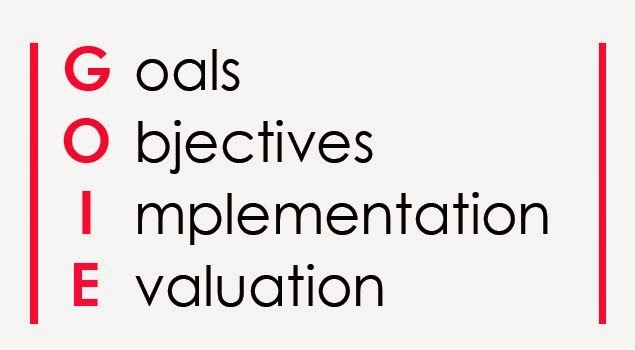
I know, it doesn't sound nearly as fun as SOAP.
Stay tuned...
1 (www.CDC.gov/workplacehealthpromotion-improvementplan)

Now that your assessment report is complete, you should have a clear picture of the state of health and wellness in your workplace. The assessment report can serve as the reference tool to guide decisions when creating your plan.1 Additionally, it should identify and prioritize what health/safety concerns exist in your business. The workplace health assessment report is the springboard for your plan and your plan is the road map that provides direction for your health, safety, and wellness programming.
Considerations for any plan should include a system for prioritizing activities before developing a workplace improvement plan. This is different than prioritizing the greatest risk. How should you determine what trend should be addressed first? The easiest? The quickest? The least expensive? The one everybody likes? Apples in the break room?
The Centers for Disease Control has some guidelines for prioritizing activities. It is suggested that the employer contemplate the burden, impact, and feasibility when considering activities for workplace health improvement. In this case, burden means to consider the number of employees affected by a health risk or condition, the magnitude of the health effects for the employees such as risk for disability, quality of life or even death. Lastly, burden also refers to the direct or indirect health care and/or economic obligations.
Impact, amongst other things, is the potential health benefit of the program including the proportion of employees who might be benefited. Lastly, feasibility refers to the level of difficulty in implementing the intervention or strategy. What is the cost in dollars and time needed to plan and implement the strategy? Are the employees interested in participating? Do they see a need for this program or activity?
Once priorities have been set, then you are ready to develop a plan. Now instead of SOAP you are ready to move onto GOIE.
I know, it doesn't sound nearly as fun as SOAP.
Stay tuned...
1 (www.CDC.gov/workplacehealthpromotion-improvementplan)
Tuesday, December 23, 2014
Medical Solutions: SOAP-ing Your Wellness Program? - The "A" of SOAP
Hello again. For those of you who have been following the “SOAP-ing" series over the past few weeks, thanks for reading. This week finds us at the “A” of the SOAP-ing process. A stands for Assessment. Simply defined assessment is the act of making a judgment about something.1 A workplace health assessment helps to identify the current picture of health at a company as well as ways to improve it that can potentially increase productivity, decrease absenteeism, and control health care costs for both employees and the organization as a whole.2 It is a necessary first step before goals are developed, resources allocated, strategies adopted and interventions implemented.
Now don’t let the definition of “workplace health assessment” overwhelm you. To put it more plainly, we are going to rinse the “SOAP” off the pieces of the puzzle of your employee health status and get a really good look at all the information that you have collected. Up to this point we have been gathering the pieces of the puzzle, the pieces being the subjective and objective information. Now, we can put the puzzle together by assessing the information.
Are you starting to feel like you would rather take a nap?

Not to worry, this is where you will get the information you need to move forward. Let’s not forget why you are doing all of this. Your goal is to develop a comprehensive employee wellness program that will have a measurable impact on your workplace.
In order to do this, it is imperative that you understand your employees’ current state of wellness as well as what impacts the health of employees at work. This is the core of what assessment is all about. According to the Center for Disease Control some key questions you may want to consider as you evaluate your information are as follows:

So here we are, several weeks into reading each installment of this “SOAP” series hoping for a tangible way to go about putting together a really great workplace wellness program and it all boils down to this, the tedious task of processing information? You’ve got to be kidding me! Right now, buying apples for the break room sounds better than ever! I know, I know. Don’t give up. Remember the cliff-hanger? There is a solution.
What if there was a completely digital process for collecting biometric (objective) information? What if there was a completely digital process for collecting customized subjective information? What if that same system could generate reports in real time from that collected information? What if those reports were saved and the information could be tracked from one workplace assessment event to another year over year? No more time spent trying to read someone’s handwriting for data entry. No more inaccuracies in reporting due to human error. Now that would be something right? Surprisingly, there is only one such system that can accomplish all this and it has been developed right here in Indiana by Telamon Corporation. The solution is called statwatch.
Statwatch is a mobile application that simplifies employee health assessment and biometric screening. Statwatch is comprised of two components: stat and watch.

Stat is a tablet-based version of the boring old paper forms. Watch serves as the central repository for all the information gathered. Watch provides real-time reporting access so that a business can quickly identify health trends and respond. No more manual processing of information - saving time, money and your sanity. Thank goodness there is a solution!
To complete your assessment, you will need to review your reports to look for trends. As mentioned previously , the type of trends that you are looking for will be specific to your particular business. Next, an assessment report can be written identifying the most concerning trends and prioritizing them based on health and/or safety risk.
As a result of gathering Subjective information in the form of customized questions specific to your business, Objective information through biometric screening (blood pressure, pulse, blood sugar, etc.) and Assessing the reports generated from your information gathering, you are now ready to begin making a Plan to impact your workplace/employee wellness.
Next week: The “P” of SOAP
1 (Merriam-Webster dictionary.com)
2 (www.CDC.gov/workplacehealthpromotion/assessment)
Now don’t let the definition of “workplace health assessment” overwhelm you. To put it more plainly, we are going to rinse the “SOAP” off the pieces of the puzzle of your employee health status and get a really good look at all the information that you have collected. Up to this point we have been gathering the pieces of the puzzle, the pieces being the subjective and objective information. Now, we can put the puzzle together by assessing the information.
Are you starting to feel like you would rather take a nap?
Not to worry, this is where you will get the information you need to move forward. Let’s not forget why you are doing all of this. Your goal is to develop a comprehensive employee wellness program that will have a measurable impact on your workplace.
In order to do this, it is imperative that you understand your employees’ current state of wellness as well as what impacts the health of employees at work. This is the core of what assessment is all about. According to the Center for Disease Control some key questions you may want to consider as you evaluate your information are as follows:
- What are the key health issues affecting employees?
- What factors at the work site influence employee health?
- What are the employees’ health and safety concerns?
- What strategies are most appropriate to address these health issues?
So here we are, several weeks into reading each installment of this “SOAP” series hoping for a tangible way to go about putting together a really great workplace wellness program and it all boils down to this, the tedious task of processing information? You’ve got to be kidding me! Right now, buying apples for the break room sounds better than ever! I know, I know. Don’t give up. Remember the cliff-hanger? There is a solution.
What if there was a completely digital process for collecting biometric (objective) information? What if there was a completely digital process for collecting customized subjective information? What if that same system could generate reports in real time from that collected information? What if those reports were saved and the information could be tracked from one workplace assessment event to another year over year? No more time spent trying to read someone’s handwriting for data entry. No more inaccuracies in reporting due to human error. Now that would be something right? Surprisingly, there is only one such system that can accomplish all this and it has been developed right here in Indiana by Telamon Corporation. The solution is called statwatch.
Statwatch is a mobile application that simplifies employee health assessment and biometric screening. Statwatch is comprised of two components: stat and watch.
Stat is a tablet-based version of the boring old paper forms. Watch serves as the central repository for all the information gathered. Watch provides real-time reporting access so that a business can quickly identify health trends and respond. No more manual processing of information - saving time, money and your sanity. Thank goodness there is a solution!
To complete your assessment, you will need to review your reports to look for trends. As mentioned previously , the type of trends that you are looking for will be specific to your particular business. Next, an assessment report can be written identifying the most concerning trends and prioritizing them based on health and/or safety risk.
As a result of gathering Subjective information in the form of customized questions specific to your business, Objective information through biometric screening (blood pressure, pulse, blood sugar, etc.) and Assessing the reports generated from your information gathering, you are now ready to begin making a Plan to impact your workplace/employee wellness.
Next week: The “P” of SOAP
1 (Merriam-Webster dictionary.com)
2 (www.CDC.gov/workplacehealthpromotion/assessment)
Medical Solutions: SOAP-ing Your Wellness Program? - The "O" of SOAP
Welcome back. Here we are at the next installment of how to SOAP your wellness program. In case you didn’t get a chance to read the first installment of this series: SOAP is a system for evaluating and putting together a plan for any program or project. One of the first things I learned in nursing school was how to use the SOAP system when evaluating and planning the care of a patient. The acronym SOAP stands for Subjective, Objective, Assessment and Plan. Last week we took a look at the “S” of SOAP. Now we are moving on to the “O”.
Objective information is based on facts rather than feelings or opinions and is not influenced by feelings.1 In the health care environment, an example of objective information would be a patient’s body temperature reading. Objective data in the health care setting, therefore, can be defined as data that is factual, unbiased, and unchanged by personal feelings or interpretations.2
I bet you can tell what comes next. No? Well, now we need employee biometric screening: Blood pressure, pulse, height, weight, blood sugar, lipid profile, cholesterol, A1C. Seems simple enough, right? Just bring in an outside company to do this part. Surprisingly, this is where most workplaces get bogged down. Employee screenings take man hours to set up and run, as well as dollars to fund the testing. What’s worse is many of these screening programs bring with them inherent inaccuracies and delays inaccuracies and delays stemming from the manual entry of information collected on paper into a spread sheet or general digital form. It can take weeks from the collection of the objective data to the generation of actionable information. This is valuable time lost.
SO...What’s an HR/Wellness manager to do? I know! You’re thinking,

Have no fear, the 21st century is here! This process doesn’t have to be painful. There is a new mobile application that combats the painstaking barriers for gathering your Subjective and Objective information. Yes, there is a digital way to conduct health screening! What’s more it even generates “real time” reports!
Who would have thought that a series of article about employee wellness programs could be so exciting! I know, right? So here comes the cliff-hanger.

Before we discover the name of this revolutionary application, let’s finish SOAP-ing your Wellness Program.
Next Week: The "A" of SOAP
1 (Merriam-Webster dictionary.com)
2 (ehow.com definitions)
Objective information is based on facts rather than feelings or opinions and is not influenced by feelings.1 In the health care environment, an example of objective information would be a patient’s body temperature reading. Objective data in the health care setting, therefore, can be defined as data that is factual, unbiased, and unchanged by personal feelings or interpretations.2
I bet you can tell what comes next. No? Well, now we need employee biometric screening: Blood pressure, pulse, height, weight, blood sugar, lipid profile, cholesterol, A1C. Seems simple enough, right? Just bring in an outside company to do this part. Surprisingly, this is where most workplaces get bogged down. Employee screenings take man hours to set up and run, as well as dollars to fund the testing. What’s worse is many of these screening programs bring with them inherent inaccuracies and delays inaccuracies and delays stemming from the manual entry of information collected on paper into a spread sheet or general digital form. It can take weeks from the collection of the objective data to the generation of actionable information. This is valuable time lost.
SO...What’s an HR/Wellness manager to do? I know! You’re thinking,
Have no fear, the 21st century is here! This process doesn’t have to be painful. There is a new mobile application that combats the painstaking barriers for gathering your Subjective and Objective information. Yes, there is a digital way to conduct health screening! What’s more it even generates “real time” reports!
Who would have thought that a series of article about employee wellness programs could be so exciting! I know, right? So here comes the cliff-hanger.
Before we discover the name of this revolutionary application, let’s finish SOAP-ing your Wellness Program.
Next Week: The "A" of SOAP
1 (Merriam-Webster dictionary.com)
2 (ehow.com definitions)
Thursday, December 18, 2014
Industrial Solutions - Safety Is the Name of the Game!
One of the current primary markets for Industrial Solutions is the automotive
safety restraints market. This is automotive jargon for airbags and seatbelts. You may occasionally hear this market referred to as the passive safety market.
Telamon's wire harness function is a supplier to the four largest manufacturers of
airbag modules and seatbelts.
The second area of the safety restraints universe is the
active safety market. This is described as systems that use an understanding of the state of the vehicle to both
avoid and minimize the effects of a crash. These include braking systems, like brake assist,
traction control systems and electronic
stability control systems that interpret signals from various sensors to help
the driver control the vehicle. Additionally, forward-looking, sensor-based
systems such as Advanced Driver Assistance Systems
including adaptive cruise control and collision
warning/avoidance/mitigation systems are also considered as active safety
systems under this definition. I recently drove a vehicle with a
collision warning system. As I approached a truck from behind, the car slowed
my speed to make sure I was not too close to the truck. It was an odd feeling
as “someone” began slowing my car!
John White, our Executive Vice President, recently attended a
seminar at our largest customer. They produce driver, passenger, and side
airbags. One portion of the seminar included a short video of a plant associate
describing how their daughter had been in a crash. The driver airbag produced
by their company had saved her life while the vehicle was destroyed. This
video, with pictures of a mangled vehicle, made the responsibility for our
products more than numbers.
You have likely seen news reports regarding the recalls
related to airbags produced by Takata. A quick search of YouTube found over
2,000 videos related to this recall. While Telamon is not a part of this recall, it has again reinforced the need to
protect our processes and assure that these processes allow for the production
of defect-free parts.
The safety restraints
market is a unique industry and we are always surprised at the
collaboration within the six/seven companies that comprise this marketplace.
In some cases, they are customers or suppliers to each other as they utilize
available capacity or technology.
Telamon is a
safety supplier and we understand this responsibility. Whatever car you drive,
we likely have some part in the safety of you or your family as you head to
Grandma’s house for the holidays!
-David Lillich
VP - Sales
VP - Sales
Industrial Solutions - Telamon Corporation
Tuesday, December 16, 2014
Medical Solutions: SOAP-ing Your Wellness Program? - The "S" of SOAP
Welcome back. Let’s get down to the “nitty-gritty” of how to SOAP your wellness
program. I’m sure that those of you charged with implementing an employee wellness program are tempted to just search the web for“employee wellness vendors”. SLOW DOWN! Yes, this would definitely provide a path of least resistance, but will more than likely end up with underwhelming results. Why you ask? Well, this approach is like ordering a double cheeseburger, large order of fries, and a fried apple pie for lunch, then topping your meal off with a diet soda as a means of cutting calories. Come on now, we’ve all done it. Right?

It is vital to get a clear picture of the current state of employee health in order to determine the needs and where best to direct your efforts. You should have as much say and design impact as your vendor, along with a clear understanding of your program steps, expectations, and anticipated outcomes.
In case you didn’t get a chance to read the first installment of this series, SOAP is a system for evaluating and putting together a plan for any program or project. One of the first things I learned in nursing school was how to use the SOAP system when evaluating the health of a patient and then putting together a plan of care. The acronym SOAP stands for Subjective, Objective, Assessment and Plan. This week we are going to look at the “S” of SOAP.
What is subjective information? Simply put, subjective information is one person’s opinion. It can be based on fact, but it is one person’s interpretation of that fact.1 In the clinical setting of nursing, subjective information is the information supplied to you by the subject or patient. It is information that you cannot perceive with your own senses. For example: a patient tells you that they have pain in their leg. That is subjective information.
Ok, now let’s apply this to your employees. What would qualify as subjective information when it comes to your employee population? The goal when gathering subjective information is to get a sense of the opinion of the employees regarding their own health and wellbeing. The next goal is to gain some insight about the employees’ opinions of their physical and social work environment. It is important to remember that each company and its employees is unique and the strategies used to address employee health will vary from company to company based on the resources available, needs and interests of management and employees, and health issues that are priorities.
Great start right? Now how do we get this information? You have to ask questions. Of course, you will be looking for unique information reflective of your workplace, but here are a few ideas to get you started.
Next week: The "O" of SOAP-ing your Wellness Program.
1(Old Dominion University Libraries. www.lib.ODU.edu)
program. I’m sure that those of you charged with implementing an employee wellness program are tempted to just search the web for“employee wellness vendors”. SLOW DOWN! Yes, this would definitely provide a path of least resistance, but will more than likely end up with underwhelming results. Why you ask? Well, this approach is like ordering a double cheeseburger, large order of fries, and a fried apple pie for lunch, then topping your meal off with a diet soda as a means of cutting calories. Come on now, we’ve all done it. Right?
It is vital to get a clear picture of the current state of employee health in order to determine the needs and where best to direct your efforts. You should have as much say and design impact as your vendor, along with a clear understanding of your program steps, expectations, and anticipated outcomes.
In case you didn’t get a chance to read the first installment of this series, SOAP is a system for evaluating and putting together a plan for any program or project. One of the first things I learned in nursing school was how to use the SOAP system when evaluating the health of a patient and then putting together a plan of care. The acronym SOAP stands for Subjective, Objective, Assessment and Plan. This week we are going to look at the “S” of SOAP.
What is subjective information? Simply put, subjective information is one person’s opinion. It can be based on fact, but it is one person’s interpretation of that fact.1 In the clinical setting of nursing, subjective information is the information supplied to you by the subject or patient. It is information that you cannot perceive with your own senses. For example: a patient tells you that they have pain in their leg. That is subjective information.
Ok, now let’s apply this to your employees. What would qualify as subjective information when it comes to your employee population? The goal when gathering subjective information is to get a sense of the opinion of the employees regarding their own health and wellbeing. The next goal is to gain some insight about the employees’ opinions of their physical and social work environment. It is important to remember that each company and its employees is unique and the strategies used to address employee health will vary from company to company based on the resources available, needs and interests of management and employees, and health issues that are priorities.
Great start right? Now how do we get this information? You have to ask questions. Of course, you will be looking for unique information reflective of your workplace, but here are a few ideas to get you started.
- How would you describe your health?
- How do you physically feel when you start your day?
- How do you physically feel at the end of your day?
- When I am at work I am concerned about__________.
- True or False? I feel valued by my employer.
- True or False? I get along with my co-workers.
- How would you rate the quality of your work life?
- How would you rate the quality of your work environment?
- Do you feel that your health and safety needs are being met when you are at work?
- Do you have any concerns when at work? (i.e. environmental, cleanliness, sanitation, nutritional, safety)
Next week: The "O" of SOAP-ing your Wellness Program.
1(Old Dominion University Libraries. www.lib.ODU.edu)
Tuesday, December 9, 2014
Medical Solutions: SOAP-ing Your Wellness Program?
Don’t skip over this because you think this article is about hand-washing. IT IS NOT ABOUT HAND-WASHING...

One of the first things taught in nursing school is how to evaluate and document the condition of a patient. This system is called “SOAP” notes. SOAP notes were developed by Dr. Lawrence Weed in the 1960’s at the University of Vermont as part of the problem-orientated medical record (POMR).1 SOAP is an acronym for this system of assessment and charting. SOAP stands for:

As it turns out, this system not only works for patient care, it works for pretty much any situation, project, or program. See and you thought this was about hand-washing!
Over the next few weeks, this series, “SOAP-ing your Wellness Program” will present you with an organized and clear path to set up a new wellness program, or to evaluate an existing one. If you are like many in this ever-changing world of wellness, it can be difficult to determine where to start. Even more challenging is crafting a plan that will address the specific needs of your employee population. Last but not least, monitoring your program to identify trends, making adjustments for maximum impact and evaluating the effectiveness of your program can be a nightmare. Not to worry, all you need is a little SOAP.
Next week: The “S” of SOAP.
1(Quinn & Gordon, 2003).

One of the first things taught in nursing school is how to evaluate and document the condition of a patient. This system is called “SOAP” notes. SOAP notes were developed by Dr. Lawrence Weed in the 1960’s at the University of Vermont as part of the problem-orientated medical record (POMR).1 SOAP is an acronym for this system of assessment and charting. SOAP stands for:
As it turns out, this system not only works for patient care, it works for pretty much any situation, project, or program. See and you thought this was about hand-washing!
Over the next few weeks, this series, “SOAP-ing your Wellness Program” will present you with an organized and clear path to set up a new wellness program, or to evaluate an existing one. If you are like many in this ever-changing world of wellness, it can be difficult to determine where to start. Even more challenging is crafting a plan that will address the specific needs of your employee population. Last but not least, monitoring your program to identify trends, making adjustments for maximum impact and evaluating the effectiveness of your program can be a nightmare. Not to worry, all you need is a little SOAP.
Next week: The “S” of SOAP.
1(Quinn & Gordon, 2003).
Monday, December 1, 2014
Business Process Solutions - Resolutions for a New Year in BPO
As 2015 is just around the corner, I see it only fitting to put plans
in place now to make sure your organization can bet suited for success in the
coming year. I have put together some
areas that I think will benefit your bottom-line and your overall “health” of
your organization.
-John Owen
VP of Sales
Business Process Solutions - Telamon Corporation
1. Definition of Insanity
– Someone once said the definition of insanity is to do the same thing you have
always been doing, but to expect different results. Often times we hear the adage “it’s the way
we have always done it”. Quite frankly,
that makes me cringe. I believe in
proven processes, but those processes must always be scrutinized for continuous
improvement. If we are not adept to
change, then we are falling behind. We
know that there are many changes throughout the lifecycle of a process; we must
update our processes as those changes occur.
2. Follow the Profit –
Simplify, simplify, simplify. If there
is one thing I have learned about executing business objectives, it is that is
must be simply to execute or you begin your year just educating your team on
what it is you are trying to achieve.
Maybe your organization sells widgets and gadgets, but in reality only
widgets are profitable. Simply your
message and be the best widget maker in the market. You will see your margins/bottom-line and
customer satisfaction improves tremendously, not to mention your execution will
run more smoothly.
3. Get the right people on
board – In Jim Collins book – Good to
Great, he shares the concept that first you need to have the right people
in your organization, have the wrong people leave, and then make sure the right
people are in the right seats. This is
extremely critical for long-term success of your company. It is not easy to manage others, but we also
must have the foresight to see ahead and who can make a positive contribution
to the company and who cannot. Many
times we allow mediocrity to set in and we do not manage expectations. This is contagious to a company and when
others see you are serious about performance, all of a sudden productivity
rises.
4. Outsource what is not your
core competency - This can be a part of “following the profit”, but really
takes it a step deeper in the sense of simplicity. Maybe your widget is the core selling point
for your company. This widget outsells
any other product or service you have and is what keeps customers coming
back. Dive deep into the processes that
make this widget. Are there areas for
improvement within the procedures for production? Service?
If there is a component within the production of this widget that is not
client facing, not a core feature (filling out paperwork, stacking on pallets,
etc.) then consider outsourcing this activity to maintain your competitiveness
and prepare for growth.
I hope you have enjoyed the few resolutions we discussed above. Feel free to reach out to me, John Owen, VP
of Sales, Telamon Business Process Solutions, for any additional ideas or
comments.
Happy Holidays!
-John Owen
VP of Sales
Business Process Solutions - Telamon Corporation
Tuesday, November 25, 2014
Telecom Solutions - Touchy Subject
With Thanksgiving coming up invariably there will be controversial subjects discussed at the family dinner table. Although I am one to revel in fabulous Thanksgiving stories - and we've all had them - I am not one who will bring up a topic just to see the sparks fly. That's just wrong.
However, if you asked many people what the term "net neutrality" is or what it means, you might get a blank stare. If you ask people in the communications industry, you will unleash a torrent of opinion and emotion. Net neutrality is a very hot topic right now as changes are being proposed that will affect service providers and Internet users.
So what is "net neutrality"? I do not claim to be an expert on this subject but have done some research and have a simple understanding of the concept. Net neutrality is what we have today - an open Internet that allows all types of content to be available to anyone who can access it. At its core, the Internet provides us with access, openness, and a conduit for innovation. Take Google for instance. It us unknown when the company name became a verb, as in, "just Google it". Through Google, we can learn about any topic quickly and easily through our phones, tablets, or laptops. How many school projects have been researched through tools such as Wikipedia? This openness allows all opinions on a subject to be given the same treatment and respect. When researching a topic, one can see all sides presented and make informed conclusions. In terms of innovation, where would Amazon, Netflix, and Facebook be without open Internet? All of these companies have relied on the ability to reach a broad number of users to further their product and with an open Internet, have become incredibly successful.
So, what's the problem? Here's where things get sticky...many of the uses of the Internet take massive amounts of broadband capacity to deliver - think Netflix and YouTube. It has been proposed that users of these types of applications can be charged more for taking up much of the Internet Service Providers (ISP) capacity. This sets up a "pay for play" scenario that flies in the face of access for all as some may not be able to afford these services going forward. ISP's are in favor of this as it would produce huge revenues for them. Opponents say that the ISP's could control the content and restrict information flow to end users.
This issue has made it into the judicial system with a case in early 2014 affirming the FCC's authority to regulate broadband Internet access. However, the FCC is asking for public comment on new rules to be established for the Internet.
Ultimately this is a subject that will affect us all - especially you, dear reader, as you are accessing this blog via our wonderful open Internet. We are wise to learn more about it and make sure our voices are heard.
-Suzanne Beck
VP Business Development
Telecom Solutions - Telamon Corporation
Subscribe to:
Posts (Atom)