Wednesday, March 4, 2015

Medical Solutions - CPPH Conference

Telamon Medical Solutions is proud to present the Community Partnerships in Population Health Conference, “The Impact of ACA, Medicaid & Indiana HIP 2.0 on Non-Profit Health Service Providers”, on Wednesday March 11th. 

The Community Partnerships for Population Health Conference will provide key insights on three pieces of legislation – Affordable Care Act, Medicaid Expansion and Indiana HIP 2.0 – and its impacts to non profit organizations and the Medicaid eligible population. Key learning objectives will include: 

  • Impact of Affordable Care Act on Non Profit access to Grant Initiatives to support organizational sustainability, population health initiatives, and program extension 
  • Impact of Medicaid extension to the Medicaid-eligible population and the new dollars to support community health center sand healthcare service providers in treating and providing health access to the population
  • Impact of Indiana HIP 2.0 in Medicaid expansion in the State of Indiana and key knowledge points for enrollment leading to better access to healthcare and services. 

This is the first conference in an educational series targeted to non profit executive directors, non profit program managers, non profit grant writers, policy researchers, community health centers, population health nurses, and population health service organizations. 

Telamon is excited to partner with leading experts in the field to provide a learning opportunity to present the latest in regulatory impact and a discussion-based format for collaboration and knowledge sharing. We look forward to learning from our presenters – Mr. Jing Xu, Master’s candidate at Indiana University School of Public and Environmental Affairs with front line experience with Enroll America and National Community Health Centers in Washington DC and Mr. J Hopkins, Vice President of Business Development for ClaimAid Consulting, a leading provider of comprehensive eligibility and enrollment services and claims resolution for hospitals and health care providers, with significant perspectives from his many years at Eskenazi Health, Indiana Health Care Association, and State of Indiana, Family & Social Services Administration. Significant experiences and perspectives!

Check back during our next featured blog for a summary of teachings and takeaways.
Registration for the event is available at http://bit.ly/1L3y8j4.

Tuesday, March 3, 2015

Telecom Solutions - The "Greening" of Telamon


The revolution started slowly and quietly. It’s difficult to nail down the exact cause or time but several things contributed.  All of a sudden, the energy required for equipment and the energy expended from equipment became a big issue.  Perhaps it was in the increase in electric utility rates or the sudden – and expensive - need to beef up the building cooling systems.  Perhaps both coming at nearly the same time.

Back in the day - a phrase I love as it conjures up images of horse drawn carriages and lack of indoor plumbing – telephone equipment offices, large and small, sometimes had hot and cold areas.  There were spaces designed that would keep equipment at appropriate temperatures as some were far more sensitive than others. Digital switching electronics and battery plants come to mind immediately.  It didn’t take long to notice that there were some equipment types and manufacturers that generated a lot of heat.  Heat is a byproduct of inefficient use of power consumption and too much contributes to expense in ways that telecom providers had not previously considered.  Several immediate steps were taken.   

First, technology that was no longer in use was turned down and, where practical, removed.  It seems intuitive but there were oftentimes aisles upon aisles of equipment that had been bypassed but electricity was still flowing to.  This was a huge waste. Second, network planners and facilities managers started to work together to assess the impact of new technologies on the existing infrastructure.  A new technology could potentially require a full, and very expensive,  upgrade to the HVAC system. Thirdly, executives approached equipment manufacturers with the request to design equipment with energy efficiency in mind.  It has been widely documented that the equipment deployed in the telecom industry alone accounts for at least one percent of the power used globally.  This may not sound like a lot but it equates to billions of kilowatt hours annually. With emerging new services and technologies this consumption is not expected to go down but up – along with the price of energy. To encourage this radical change in mindset, RFP’s were written to include efficiency standards.  If you wanted to participate, manufacturers had to potentially redesign products to meet these standards.  And they did.

At the same time, utility energy rates continued to climb. Once the standard facility conservation practices were put into place – lower thermostats, controlled lighting, etc. – telecom providers had to start getting creative in lowering operating expense related to energy consumption.    It has been very encouraging to see the telecom industry as a whole embrace alternative energy as a sustainable and financially viable business model.  The large scale use of solar and wind for datacenter rooftops, fuel cells at small and remote locations and research into deployment of biofuels and geothermal for large corporate campuses is proving itself economically and will hopefully persuade other industries to continue to follow suit.

- Suzanne Beck
VP Sales
Telecom Solutions

Tuesday, February 17, 2015

Industrial Solutions - Winning New Business

Winning new business for the Industrial Solutions group requires much more than providing a quotation with a price and waiting to receive the purchase order. A typical new business award will be the opportunity to supply a quantity of parts at an agreed upon price for 3-4 years. The automotive sector represents the primary customer base for the wire harness team and each year the automotive industry works to reduce the supply base to those companies that can meet a more demanding set of criteria. Each year the challenge is to extend payment terms, provide price reductions, reduce lead-times, reduce Defective Parts Per Million (DPPM), and increase our engineering support. This seems exhausting just reading it!

Telamon continues to flourish in this industry by accepting these challenges and by working to improve our processes and increase our product knowledge. Our customers are acknowledging their appreciation of these efforts by awarding new business. We are also being exposed to new customers and new business opportunities based on this reputation. Word of mouth is one of the best ways to be introduced to new business. The same is true when a valuable contact at an existing customer moves to another company and introduces us to their new company.

While price is the perceived prime driver, we are surprised recently at the focus on quality, delivery, and customer support. Our customers must highlight our performance in these areas when promoting Telamon for new business because our customers will disqualify a supplier that does not meet the performance requirements in these areas even if their price is lower. The emphasis on quality and delivery means that everyone in our organization plays a role in winning new business! 


We use Advanced Product Quality Planning (APQP) tools to assure that we meet each of these expectations. Our customers use Contract Reviews, Team Feasibility Commitments, Supplier Quality Portals, and other documents to monitor our progress in developing the production processes. Additionally, our customers regularly audit our Fresnillo facility to assure we are producing their parts in compliance with the process documentation.    

It can be grueling at times, however we enjoy our automotive business and are always actively involved in winning new customers in other markets. We have a specific strategy to help us achieve this initiative, and we will discuss this strategy in our next blog!

- David Lillich
VP Sales
Industrial Solutions - Telamon Corporation

Tuesday, February 3, 2015

Business Process Solutions - 2015 Projections for Outsourcing

The Accounts Payable Network, a network of more than 50,000 AP process owners in the U.S. and around the world, is the world's largest AP-focused organization. Since Telamon's Business Process Solutions group focuses primarily on finance and accounting, we follow the news associated with this network religiously. A recent article, "Outsourcing in 2015" by Wilma Miranda, highlights what outsourcing trends are expected in 2015.

With projected growth for business process outsourcing there has been a heavy focus on what companies can do to stay at pace with this growth. Miranda points out that many clients are leaning toward acquiring more specialized services rather than general, horizontal services. To appease to clients Miranda suggests concentrating on vertical segments and aim at providing to industries such as Manufacturing, Healthcare, and Retail. This means it will be imperative that companies have more explicit knowledge about different industries as well as the clients and their competition.


US cities have been targeted as potential prospects for growth in outsourcing which means that companies must start paying attention to these shifts toward specialized offerings now.

Telamon Business Process Solutions provides transaction processing for the Logistics, Transportation, Retail, Distribution, and Healthcare markets. We pride ourselves on understanding the characteristics and business needs of these markets and becoming the extended business office of choice.

To read more from "Outsourcing in 2015" and lean about the growth in outsourcing click here.

- John Owen
VP Sales
Business Process Solutions - Telamon Corporation

Friday, January 16, 2015

Telecom Solutions - Totally Connected


In previous blogs I have written about the wide variety of "things" that now have integrated connectivity and are part of the "Internet of Things". This movement has even been reduced to an acronym - IoT. In addition, I have written about Smart Grid and Smart Circles which are growing more and more prevalent as leaders see the vast benefits. One wonders, what's next? Well, at the annual Consumer Electronics Show in Las Vegas and the Detroit Auto Show this year, the question was answered. Next on the connectivity horizon is our car.

Now, you might think that with the introduction of General Motors "OnStar" product in 1995 that this is old news. But OnStar was only available in certain models of new cars and at a premium price. It had limited features, however GM saw the potential and continued to develop the product. In 2015, auto manufacturers have introduced high speed 4G LTE into the dashboard as well as self-driving capabilities and high end entertainment systems. Our connected car is becoming more of a reality as both AT&T's "Drive" platform and Verizon's "Vehicle" will be able to give us real time information about our vehicle - reminding us in a human voice to change our oil rather than seeing an ominous blinking icon which looks like nothing like it's supposed to - as well as many voice activated features controlling the entertainment system and phone features. AT&T and Verizon are taking different approaches to this connected car movement. AT&T is working directly with auto manufacturers and Verizon is offering a standalone product that can be used in older vehicles or those not quite equipped with the latest connectivity features.

Couple this with the advances in smart highway and home technologies and soon enough we will be able - through our car - to take the fastest way home at the end of the day and know what's waiting for us when we get there. Again, if only technology can work it out to have a nice glass of wine poured and ready, it would be perfect!

-Suzanne Beck
VP Business Development
Telecom Solutions - Telamon Corporation

Tuesday, January 6, 2015

Medical Solutions: SOAP-ing Your Wellness Program? - The "P" of SOAP

Your patience has served you well gentle reader. You have made it to the final installment of “SOAP-ing your wellness program.” We are ready to look at the “P” of SOAP. P represents plan. Remember those apples that you have been wanting to bring into the break room? This is the point in the SOAP process where this type of intervention would come in.

Now that your assessment report is complete, you should have a clear picture of the state of health and wellness in your workplace. The assessment report can serve as the reference tool to guide decisions when creating your plan.1 Additionally, it should identify and prioritize what health/safety concerns exist in your business. The workplace health assessment report is the springboard for your plan and your plan is the road map that provides direction for your health, safety, and wellness programming.

Considerations for any plan should include a system for prioritizing activities before developing a workplace improvement plan. This is different than prioritizing the greatest risk. How should you determine what trend should be addressed first? The easiest? The quickest? The least expensive? The one everybody likes? Apples in the break room?


The Centers for Disease Control has some guidelines for prioritizing activities. It is suggested that the employer contemplate the burden, impact, and feasibility when considering activities for workplace health improvement. In this case, burden means to consider the number of employees affected by a health risk or condition, the magnitude of the health effects for the employees such as risk for disability, quality of life or even death. Lastly, burden also refers to the direct or indirect health care and/or economic obligations.

Impact, amongst other things, is the potential health benefit of the program including the proportion of employees who might be benefited. Lastly, feasibility refers to the level of difficulty in implementing the intervention or strategy. What is the cost in dollars and time needed to plan and implement the strategy? Are the employees interested in participating? Do they see a need for this program or activity?

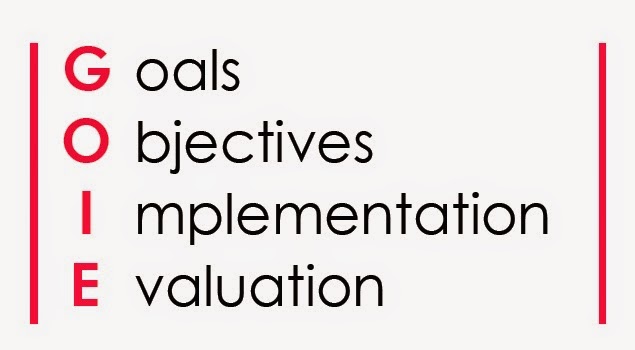
Once priorities have been set, then you are ready to develop a plan. Now instead of SOAP you are ready to move onto GOIE.


I know, it doesn't sound nearly as fun as SOAP.

Stay tuned...

1 (www.CDC.gov/workplacehealthpromotion-improvementplan)

Tuesday, December 23, 2014

Medical Solutions: SOAP-ing Your Wellness Program? - The "A" of SOAP

Hello again. For those of you who have been following the “SOAP-ing" series over the past few weeks, thanks for reading. This week finds us at the “A” of the SOAP-ing process. A stands for Assessment. Simply defined assessment is the act of making a judgment about something.1 A workplace health assessment helps to identify the current picture of health at a company as well as ways to improve it that can potentially increase productivity, decrease absenteeism, and control health care costs for both employees and the organization as a whole.2 It is a necessary first step before goals are developed, resources allocated, strategies adopted and interventions implemented.

Now don’t let the definition of “workplace health assessment” overwhelm you. To put it more plainly, we are going to rinse the “SOAP” off the pieces of the puzzle of your employee health status and get a really good look at all the information that you have collected. Up to this point we have been gathering the pieces of the puzzle, the pieces being the subjective and objective information. Now, we can put the puzzle together by assessing the information.

Are you starting to feel like you would rather take a nap?


Not to worry, this is where you will get the information you need to move forward. Let’s not forget why you are doing all of this. Your goal is to develop a comprehensive employee wellness program that will have a measurable impact on your workplace.

In order to do this, it is imperative that you understand your employees’ current state of wellness as well as what impacts the health of employees at work. This is the core of what assessment is all about. According to the Center for Disease Control some key questions you may want to consider as you evaluate your information are as follows:

  1. What are the key health issues affecting employees?
  2. What factors at the work site influence employee health?
  3. What are the employees’ health and safety concerns?
  4. What strategies are most appropriate to address these health issues?
So where should we begin? If you are like many, all of your subjective and objective information has been recorded on paper. Argh! Now what? Well, somehow this paper-based information has got to be processed into a usable report. In most situations this requires labor and time intensive effort by ..you? Argh! What? You don’t like setting up spread sheets or retrofitting information into a generic data base? Me neither, but if you are going to put this puzzle together, this information has to be transformed into reports so that you can see the whole, clear and accurate puzzle picture. Additionally, the accuracy/focus of the picture begins to fade the more time it takes to get these reports.


So here we are, several weeks into reading each installment of this “SOAP” series hoping for a tangible way to go about putting together a really great workplace wellness program and it all boils down to this, the tedious task of processing information? You’ve got to be kidding me! Right now, buying apples for the break room sounds better than ever! I know, I know. Don’t give up. Remember the cliff-hanger? There is a solution.

What if there was a completely digital process for collecting biometric (objective) information? What if there was a completely digital process for collecting customized subjective information? What if that same system could generate reports in real time from that collected information? What if those reports were saved and the information could be tracked from one workplace assessment event to another year over year? No more time spent trying to read someone’s handwriting for data entry. No more inaccuracies in reporting due to human error. Now that would be something right? Surprisingly, there is only one such system that can accomplish all this and it has been developed right here in Indiana by Telamon Corporation. The solution is called statwatch.

Statwatch is a mobile application that simplifies employee health assessment and biometric screening. Statwatch is comprised of two components: stat and watch.


Stat is a tablet-based version of the boring old paper forms. Watch serves as the central repository for all the information gathered. Watch provides real-time reporting access so that a business can quickly identify health trends and respond. No more manual processing of information - saving time, money and your sanity. Thank goodness there is a solution!

To complete your assessment, you will need to review your reports to look for trends. As mentioned previously , the type of trends that you are looking for will be specific to your particular business. Next, an assessment report can be written identifying the most concerning trends and prioritizing them based on health and/or safety risk.

As a result of gathering Subjective information in the form of customized questions specific to your business, Objective information through biometric screening (blood pressure, pulse, blood sugar, etc.) and Assessing the reports generated from your information gathering, you are now ready to begin making a Plan to impact your workplace/employee wellness.

Next week: The “P” of SOAP

1  (Merriam-Webster dictionary.com)
2  (www.CDC.gov/workplacehealthpromotion/assessment)