Your patience has served you well gentle reader. You have made it to the final installment of “SOAP-ing your wellness program.” We are ready to look at the “P” of SOAP. P represents plan. Remember those apples that you have been wanting to bring into the break room? This is the point in the SOAP process where this type of intervention would come in.
Now that your assessment report is complete, you should have a clear picture of the state of health and wellness in your workplace. The assessment report can serve as the reference tool to guide decisions when creating your plan.1 Additionally, it should identify and prioritize what health/safety concerns exist in your business. The workplace health assessment report is the springboard for your plan and your plan is the road map that provides direction for your health, safety, and wellness programming.
Considerations for any plan should include a system for prioritizing activities before developing a workplace improvement plan. This is different than prioritizing the greatest risk. How should you determine what trend should be addressed first? The easiest? The quickest? The least expensive? The one everybody likes? Apples in the break room?
The Centers for Disease Control has some guidelines for prioritizing activities. It is suggested that the employer contemplate the burden, impact, and feasibility when considering activities for workplace health improvement. In this case, burden means to consider the number of employees affected by a health risk or condition, the magnitude of the health effects for the employees such as risk for disability, quality of life or even death. Lastly, burden also refers to the direct or indirect health care and/or economic obligations.
Impact, amongst other things, is the potential health benefit of the program including the proportion of employees who might be benefited. Lastly, feasibility refers to the level of difficulty in implementing the intervention or strategy. What is the cost in dollars and time needed to plan and implement the strategy? Are the employees interested in participating? Do they see a need for this program or activity?
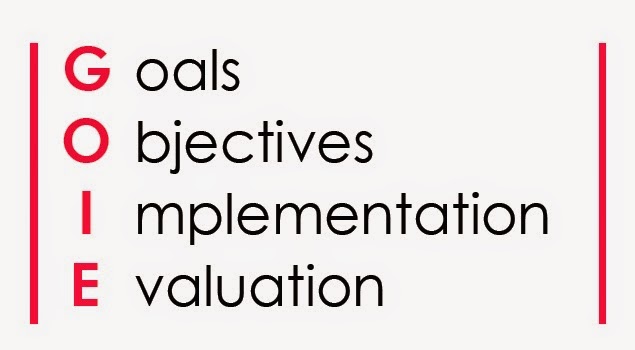
Once priorities have been set, then you are ready to develop a plan. Now instead of SOAP you are ready to move onto GOIE.
I know, it doesn't sound nearly as fun as SOAP.
Stay tuned...
1 (www.CDC.gov/workplacehealthpromotion-improvementplan)
Tuesday, January 6, 2015
Tuesday, December 23, 2014
Medical Solutions: SOAP-ing Your Wellness Program? - The "A" of SOAP
Hello again. For those of you who have been following the “SOAP-ing" series over the past few weeks, thanks for reading. This week finds us at the “A” of the SOAP-ing process. A stands for Assessment. Simply defined assessment is the act of making a judgment about something.1 A workplace health assessment helps to identify the current picture of health at a company as well as ways to improve it that can potentially increase productivity, decrease absenteeism, and control health care costs for both employees and the organization as a whole.2 It is a necessary first step before goals are developed, resources allocated, strategies adopted and interventions implemented.
Now don’t let the definition of “workplace health assessment” overwhelm you. To put it more plainly, we are going to rinse the “SOAP” off the pieces of the puzzle of your employee health status and get a really good look at all the information that you have collected. Up to this point we have been gathering the pieces of the puzzle, the pieces being the subjective and objective information. Now, we can put the puzzle together by assessing the information.
Are you starting to feel like you would rather take a nap?
Not to worry, this is where you will get the information you need to move forward. Let’s not forget why you are doing all of this. Your goal is to develop a comprehensive employee wellness program that will have a measurable impact on your workplace.
In order to do this, it is imperative that you understand your employees’ current state of wellness as well as what impacts the health of employees at work. This is the core of what assessment is all about. According to the Center for Disease Control some key questions you may want to consider as you evaluate your information are as follows:
So here we are, several weeks into reading each installment of this “SOAP” series hoping for a tangible way to go about putting together a really great workplace wellness program and it all boils down to this, the tedious task of processing information? You’ve got to be kidding me! Right now, buying apples for the break room sounds better than ever! I know, I know. Don’t give up. Remember the cliff-hanger? There is a solution.
What if there was a completely digital process for collecting biometric (objective) information? What if there was a completely digital process for collecting customized subjective information? What if that same system could generate reports in real time from that collected information? What if those reports were saved and the information could be tracked from one workplace assessment event to another year over year? No more time spent trying to read someone’s handwriting for data entry. No more inaccuracies in reporting due to human error. Now that would be something right? Surprisingly, there is only one such system that can accomplish all this and it has been developed right here in Indiana by Telamon Corporation. The solution is called statwatch.
Statwatch is a mobile application that simplifies employee health assessment and biometric screening. Statwatch is comprised of two components: stat and watch.
Stat is a tablet-based version of the boring old paper forms. Watch serves as the central repository for all the information gathered. Watch provides real-time reporting access so that a business can quickly identify health trends and respond. No more manual processing of information - saving time, money and your sanity. Thank goodness there is a solution!
To complete your assessment, you will need to review your reports to look for trends. As mentioned previously , the type of trends that you are looking for will be specific to your particular business. Next, an assessment report can be written identifying the most concerning trends and prioritizing them based on health and/or safety risk.
As a result of gathering Subjective information in the form of customized questions specific to your business, Objective information through biometric screening (blood pressure, pulse, blood sugar, etc.) and Assessing the reports generated from your information gathering, you are now ready to begin making a Plan to impact your workplace/employee wellness.
Next week: The “P” of SOAP
1 (Merriam-Webster dictionary.com)
2 (www.CDC.gov/workplacehealthpromotion/assessment)
Now don’t let the definition of “workplace health assessment” overwhelm you. To put it more plainly, we are going to rinse the “SOAP” off the pieces of the puzzle of your employee health status and get a really good look at all the information that you have collected. Up to this point we have been gathering the pieces of the puzzle, the pieces being the subjective and objective information. Now, we can put the puzzle together by assessing the information.
Are you starting to feel like you would rather take a nap?
Not to worry, this is where you will get the information you need to move forward. Let’s not forget why you are doing all of this. Your goal is to develop a comprehensive employee wellness program that will have a measurable impact on your workplace.
In order to do this, it is imperative that you understand your employees’ current state of wellness as well as what impacts the health of employees at work. This is the core of what assessment is all about. According to the Center for Disease Control some key questions you may want to consider as you evaluate your information are as follows:
- What are the key health issues affecting employees?
- What factors at the work site influence employee health?
- What are the employees’ health and safety concerns?
- What strategies are most appropriate to address these health issues?
So here we are, several weeks into reading each installment of this “SOAP” series hoping for a tangible way to go about putting together a really great workplace wellness program and it all boils down to this, the tedious task of processing information? You’ve got to be kidding me! Right now, buying apples for the break room sounds better than ever! I know, I know. Don’t give up. Remember the cliff-hanger? There is a solution.
What if there was a completely digital process for collecting biometric (objective) information? What if there was a completely digital process for collecting customized subjective information? What if that same system could generate reports in real time from that collected information? What if those reports were saved and the information could be tracked from one workplace assessment event to another year over year? No more time spent trying to read someone’s handwriting for data entry. No more inaccuracies in reporting due to human error. Now that would be something right? Surprisingly, there is only one such system that can accomplish all this and it has been developed right here in Indiana by Telamon Corporation. The solution is called statwatch.
Statwatch is a mobile application that simplifies employee health assessment and biometric screening. Statwatch is comprised of two components: stat and watch.
Stat is a tablet-based version of the boring old paper forms. Watch serves as the central repository for all the information gathered. Watch provides real-time reporting access so that a business can quickly identify health trends and respond. No more manual processing of information - saving time, money and your sanity. Thank goodness there is a solution!
To complete your assessment, you will need to review your reports to look for trends. As mentioned previously , the type of trends that you are looking for will be specific to your particular business. Next, an assessment report can be written identifying the most concerning trends and prioritizing them based on health and/or safety risk.
As a result of gathering Subjective information in the form of customized questions specific to your business, Objective information through biometric screening (blood pressure, pulse, blood sugar, etc.) and Assessing the reports generated from your information gathering, you are now ready to begin making a Plan to impact your workplace/employee wellness.
Next week: The “P” of SOAP
1 (Merriam-Webster dictionary.com)
2 (www.CDC.gov/workplacehealthpromotion/assessment)
Medical Solutions: SOAP-ing Your Wellness Program? - The "O" of SOAP
Welcome back. Here we are at the next installment of how to SOAP your wellness program. In case you didn’t get a chance to read the first installment of this series: SOAP is a system for evaluating and putting together a plan for any program or project. One of the first things I learned in nursing school was how to use the SOAP system when evaluating and planning the care of a patient. The acronym SOAP stands for Subjective, Objective, Assessment and Plan. Last week we took a look at the “S” of SOAP. Now we are moving on to the “O”.
Objective information is based on facts rather than feelings or opinions and is not influenced by feelings.1 In the health care environment, an example of objective information would be a patient’s body temperature reading. Objective data in the health care setting, therefore, can be defined as data that is factual, unbiased, and unchanged by personal feelings or interpretations.2
I bet you can tell what comes next. No? Well, now we need employee biometric screening: Blood pressure, pulse, height, weight, blood sugar, lipid profile, cholesterol, A1C. Seems simple enough, right? Just bring in an outside company to do this part. Surprisingly, this is where most workplaces get bogged down. Employee screenings take man hours to set up and run, as well as dollars to fund the testing. What’s worse is many of these screening programs bring with them inherent inaccuracies and delays inaccuracies and delays stemming from the manual entry of information collected on paper into a spread sheet or general digital form. It can take weeks from the collection of the objective data to the generation of actionable information. This is valuable time lost.
SO...What’s an HR/Wellness manager to do? I know! You’re thinking,
Have no fear, the 21st century is here! This process doesn’t have to be painful. There is a new mobile application that combats the painstaking barriers for gathering your Subjective and Objective information. Yes, there is a digital way to conduct health screening! What’s more it even generates “real time” reports!
Who would have thought that a series of article about employee wellness programs could be so exciting! I know, right? So here comes the cliff-hanger.
Before we discover the name of this revolutionary application, let’s finish SOAP-ing your Wellness Program.
Next Week: The "A" of SOAP
1 (Merriam-Webster dictionary.com)
2 (ehow.com definitions)
Thursday, December 18, 2014
Industrial Solutions - Safety Is the Name of the Game!
One of the current primary markets for Industrial Solutions is the automotive
safety restraints market. This is automotive jargon for airbags and seatbelts. You may occasionally hear this market referred to as the passive safety market.
Telamon's wire harness function is a supplier to the four largest manufacturers of
airbag modules and seatbelts.
The second area of the safety restraints universe is the
active safety market. This is described as systems that use an understanding of the state of the vehicle to both
avoid and minimize the effects of a crash. These include braking systems, like brake assist,
traction control systems and electronic
stability control systems that interpret signals from various sensors to help
the driver control the vehicle. Additionally, forward-looking, sensor-based
systems such as Advanced Driver Assistance Systems
including adaptive cruise control and collision
warning/avoidance/mitigation systems are also considered as active safety
systems under this definition. I recently drove a vehicle with a
collision warning system. As I approached a truck from behind, the car slowed
my speed to make sure I was not too close to the truck. It was an odd feeling
as “someone” began slowing my car!
John White, our Executive Vice President, recently attended a
seminar at our largest customer. They produce driver, passenger, and side
airbags. One portion of the seminar included a short video of a plant associate
describing how their daughter had been in a crash. The driver airbag produced
by their company had saved her life while the vehicle was destroyed. This
video, with pictures of a mangled vehicle, made the responsibility for our
products more than numbers.
You have likely seen news reports regarding the recalls
related to airbags produced by Takata. A quick search of YouTube found over
2,000 videos related to this recall. While Telamon is not a part of this recall, it has again reinforced the need to
protect our processes and assure that these processes allow for the production
of defect-free parts.
The safety restraints
market is a unique industry and we are always surprised at the
collaboration within the six/seven companies that comprise this marketplace.
In some cases, they are customers or suppliers to each other as they utilize
available capacity or technology.
Telamon is a
safety supplier and we understand this responsibility. Whatever car you drive,
we likely have some part in the safety of you or your family as you head to
Grandma’s house for the holidays!
-David Lillich
VP - Sales
VP - Sales
Industrial Solutions - Telamon Corporation
Tuesday, December 16, 2014
Medical Solutions: SOAP-ing Your Wellness Program? - The "S" of SOAP
Welcome back. Let’s get down to the “nitty-gritty” of how to SOAP your wellness
program. I’m sure that those of you charged with implementing an employee wellness program are tempted to just search the web for“employee wellness vendors”. SLOW DOWN! Yes, this would definitely provide a path of least resistance, but will more than likely end up with underwhelming results. Why you ask? Well, this approach is like ordering a double cheeseburger, large order of fries, and a fried apple pie for lunch, then topping your meal off with a diet soda as a means of cutting calories. Come on now, we’ve all done it. Right?
It is vital to get a clear picture of the current state of employee health in order to determine the needs and where best to direct your efforts. You should have as much say and design impact as your vendor, along with a clear understanding of your program steps, expectations, and anticipated outcomes.
In case you didn’t get a chance to read the first installment of this series, SOAP is a system for evaluating and putting together a plan for any program or project. One of the first things I learned in nursing school was how to use the SOAP system when evaluating the health of a patient and then putting together a plan of care. The acronym SOAP stands for Subjective, Objective, Assessment and Plan. This week we are going to look at the “S” of SOAP.
What is subjective information? Simply put, subjective information is one person’s opinion. It can be based on fact, but it is one person’s interpretation of that fact.1 In the clinical setting of nursing, subjective information is the information supplied to you by the subject or patient. It is information that you cannot perceive with your own senses. For example: a patient tells you that they have pain in their leg. That is subjective information.
Ok, now let’s apply this to your employees. What would qualify as subjective information when it comes to your employee population? The goal when gathering subjective information is to get a sense of the opinion of the employees regarding their own health and wellbeing. The next goal is to gain some insight about the employees’ opinions of their physical and social work environment. It is important to remember that each company and its employees is unique and the strategies used to address employee health will vary from company to company based on the resources available, needs and interests of management and employees, and health issues that are priorities.
Great start right? Now how do we get this information? You have to ask questions. Of course, you will be looking for unique information reflective of your workplace, but here are a few ideas to get you started.
Next week: The "O" of SOAP-ing your Wellness Program.
1(Old Dominion University Libraries. www.lib.ODU.edu)
program. I’m sure that those of you charged with implementing an employee wellness program are tempted to just search the web for“employee wellness vendors”. SLOW DOWN! Yes, this would definitely provide a path of least resistance, but will more than likely end up with underwhelming results. Why you ask? Well, this approach is like ordering a double cheeseburger, large order of fries, and a fried apple pie for lunch, then topping your meal off with a diet soda as a means of cutting calories. Come on now, we’ve all done it. Right?
It is vital to get a clear picture of the current state of employee health in order to determine the needs and where best to direct your efforts. You should have as much say and design impact as your vendor, along with a clear understanding of your program steps, expectations, and anticipated outcomes.
In case you didn’t get a chance to read the first installment of this series, SOAP is a system for evaluating and putting together a plan for any program or project. One of the first things I learned in nursing school was how to use the SOAP system when evaluating the health of a patient and then putting together a plan of care. The acronym SOAP stands for Subjective, Objective, Assessment and Plan. This week we are going to look at the “S” of SOAP.
What is subjective information? Simply put, subjective information is one person’s opinion. It can be based on fact, but it is one person’s interpretation of that fact.1 In the clinical setting of nursing, subjective information is the information supplied to you by the subject or patient. It is information that you cannot perceive with your own senses. For example: a patient tells you that they have pain in their leg. That is subjective information.
Ok, now let’s apply this to your employees. What would qualify as subjective information when it comes to your employee population? The goal when gathering subjective information is to get a sense of the opinion of the employees regarding their own health and wellbeing. The next goal is to gain some insight about the employees’ opinions of their physical and social work environment. It is important to remember that each company and its employees is unique and the strategies used to address employee health will vary from company to company based on the resources available, needs and interests of management and employees, and health issues that are priorities.
Great start right? Now how do we get this information? You have to ask questions. Of course, you will be looking for unique information reflective of your workplace, but here are a few ideas to get you started.
- How would you describe your health?
- How do you physically feel when you start your day?
- How do you physically feel at the end of your day?
- When I am at work I am concerned about__________.
- True or False? I feel valued by my employer.
- True or False? I get along with my co-workers.
- How would you rate the quality of your work life?
- How would you rate the quality of your work environment?
- Do you feel that your health and safety needs are being met when you are at work?
- Do you have any concerns when at work? (i.e. environmental, cleanliness, sanitation, nutritional, safety)
Next week: The "O" of SOAP-ing your Wellness Program.
1(Old Dominion University Libraries. www.lib.ODU.edu)
Tuesday, December 9, 2014
Medical Solutions: SOAP-ing Your Wellness Program?
Don’t skip over this because you think this article is about hand-washing. IT IS NOT ABOUT HAND-WASHING...
One of the first things taught in nursing school is how to evaluate and document the condition of a patient. This system is called “SOAP” notes. SOAP notes were developed by Dr. Lawrence Weed in the 1960’s at the University of Vermont as part of the problem-orientated medical record (POMR).1 SOAP is an acronym for this system of assessment and charting. SOAP stands for:
As it turns out, this system not only works for patient care, it works for pretty much any situation, project, or program. See and you thought this was about hand-washing!
Over the next few weeks, this series, “SOAP-ing your Wellness Program” will present you with an organized and clear path to set up a new wellness program, or to evaluate an existing one. If you are like many in this ever-changing world of wellness, it can be difficult to determine where to start. Even more challenging is crafting a plan that will address the specific needs of your employee population. Last but not least, monitoring your program to identify trends, making adjustments for maximum impact and evaluating the effectiveness of your program can be a nightmare. Not to worry, all you need is a little SOAP.
Next week: The “S” of SOAP.
1(Quinn & Gordon, 2003).
Monday, December 1, 2014
Business Process Solutions - Resolutions for a New Year in BPO
As 2015 is just around the corner, I see it only fitting to put plans
in place now to make sure your organization can bet suited for success in the
coming year. I have put together some
areas that I think will benefit your bottom-line and your overall “health” of
your organization.
-John Owen
VP of Sales
Business Process Solutions - Telamon Corporation
1. Definition of Insanity
– Someone once said the definition of insanity is to do the same thing you have
always been doing, but to expect different results. Often times we hear the adage “it’s the way
we have always done it”. Quite frankly,
that makes me cringe. I believe in
proven processes, but those processes must always be scrutinized for continuous
improvement. If we are not adept to
change, then we are falling behind. We
know that there are many changes throughout the lifecycle of a process; we must
update our processes as those changes occur.
2. Follow the Profit –
Simplify, simplify, simplify. If there
is one thing I have learned about executing business objectives, it is that is
must be simply to execute or you begin your year just educating your team on
what it is you are trying to achieve.
Maybe your organization sells widgets and gadgets, but in reality only
widgets are profitable. Simply your
message and be the best widget maker in the market. You will see your margins/bottom-line and
customer satisfaction improves tremendously, not to mention your execution will
run more smoothly.
3. Get the right people on
board – In Jim Collins book – Good to
Great, he shares the concept that first you need to have the right people
in your organization, have the wrong people leave, and then make sure the right
people are in the right seats. This is
extremely critical for long-term success of your company. It is not easy to manage others, but we also
must have the foresight to see ahead and who can make a positive contribution
to the company and who cannot. Many
times we allow mediocrity to set in and we do not manage expectations. This is contagious to a company and when
others see you are serious about performance, all of a sudden productivity
rises.
4. Outsource what is not your
core competency - This can be a part of “following the profit”, but really
takes it a step deeper in the sense of simplicity. Maybe your widget is the core selling point
for your company. This widget outsells
any other product or service you have and is what keeps customers coming
back. Dive deep into the processes that
make this widget. Are there areas for
improvement within the procedures for production? Service?
If there is a component within the production of this widget that is not
client facing, not a core feature (filling out paperwork, stacking on pallets,
etc.) then consider outsourcing this activity to maintain your competitiveness
and prepare for growth.
I hope you have enjoyed the few resolutions we discussed above. Feel free to reach out to me, John Owen, VP
of Sales, Telamon Business Process Solutions, for any additional ideas or
comments.
Happy Holidays!
-John Owen
VP of Sales
Business Process Solutions - Telamon Corporation
Subscribe to:
Posts (Atom)


